
PRATY

Pratyaksh

Categories
My Projects

Electromagnetic Suspension (Active Maglev with PID Control)

Capstone Project

Embedded Systems | Control Theory | Arduino | Electronics

Project Overview

This capstone project demonstrates an active electromagnetic levitation system that suspends a steel bolt beneath an electromagnet using closed-loop PID (Proportional-Integral-Derivative) control. The system continuously measures the position of the levitating object and dynamically adjusts the magnetic field to maintain stable levitation in real time.

Project Objective

The objective was to design and build a stable magnetic levitation system capable of maintaining a constant air gap through continuous feedback control. The project combines principles from physics, mathematics, electronics, and embedded systems to demonstrate how real-time control can stabilise an inherently unstable system.

How It Works


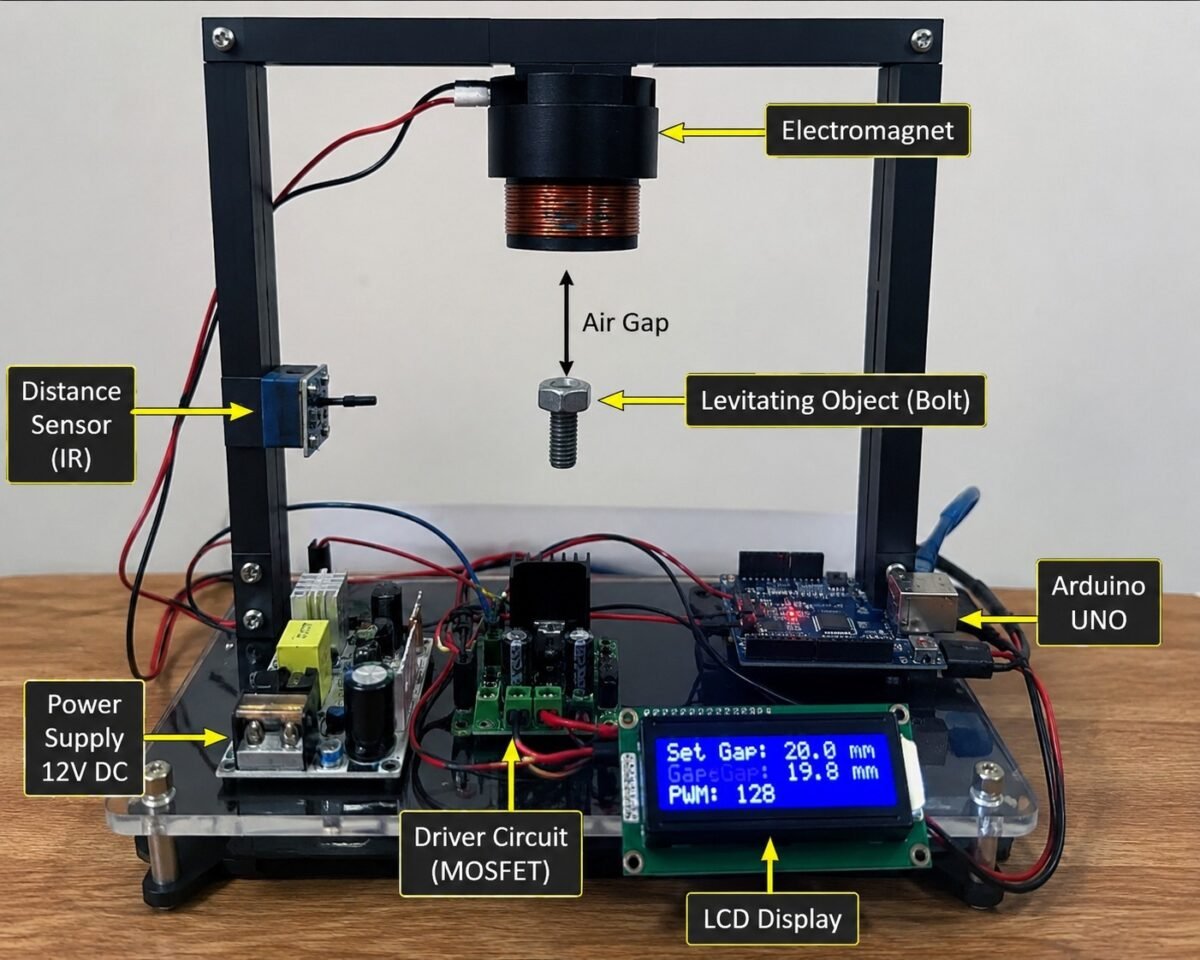
An IR distance sensor continuously measures the position of the levitating steel bolt. The sensor data is processed by an Arduino UNO, where a PID control algorithm calculates the required correction. The Arduino regulates the current supplied to the electromagnet through a MOSFET driver circuit, continuously adjusting the magnetic force to maintain the desired levitation height. An LCD display provides real-time information on the target gap, measured distance, and PWM output.

Technologies & Components

Arduino UNO | Electromagnet | IR Distance Sensor | MOSFET Driver Circuit | 12V DC Power Supply | LCD Display

Skills Demonstrated

PID Control | Embedded Programming | Arduino Development | Circuit Design | Sensor Integration | Electronics Assembly | Real-Time System Control

Key Learning:

This project bridged physics, mathematics, and electronics demonstrating how control theory can stabilise an inherently unstable system. It deepened my understanding of feedback loops, electromagnetic forces, and real-time system control.
Categories
My Projects

Vertical Axis Wind Turbine

School Project

View Document

View Video

Renewable Energy · Mechanical Design · Live Modelodel

Overview:

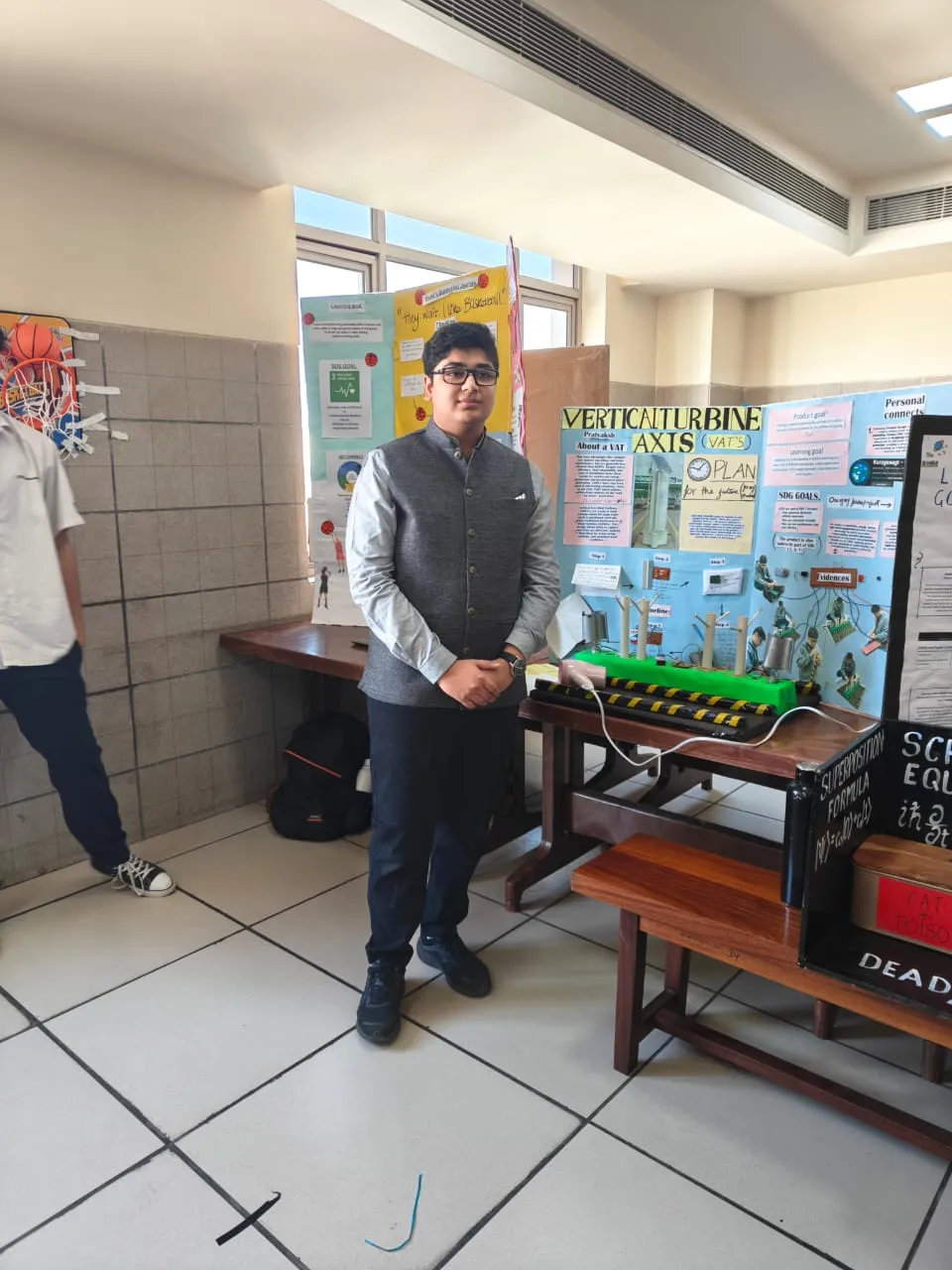
As part of my MYP Personal Project, I designed and built a working prototype of a Vertical Axis Wind Turbine (VAWT) a type of turbine where the main rotor shaft runs vertically, making it effective in capturing wind from any direction. Unlike a theoretical exercise, this project required me to physically construct, test, and troubleshoot a live functioning model, bringing together concepts from physics, mechanical design, and energy systems.

What I Did:

The project moved through three key phases initial concept development and planning, hands-on building and experimentation involving structure, wiring, and mechanical assembly, and finally a presentation where I explained the turbine’s function and design choices to evaluators. When early designs did not perform as expected, I had to revisit my approach, identify faults, and iterate experiencing firsthand that engineering is a process of continuous improvement rather than instant results.

Key Skills:
Mechanical Assembly · Renewable Energy Systems · Design Thinking · Problem Solving · Prototyping

Key Learning:

This project taught me that translating theoretical science into a working physical system requires patience, adaptability, and persistence. It deepened my interest in sustainable energy and mechanical design, and gave me confidence in tackling real engineering challenges. Most importantly, it showed me that the best learning happens when things don’t go according to plan and you have to find a way forward anyway.


Categories
My Projects

Designing a Human-Centered Habit Tracking System

Engineering Product Design Project | 2025 | MYP 4

View Document

Project Overview

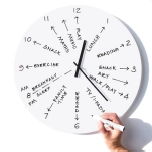
This project focused on designing and developing a physical habit tracker to help high school students improve time management, build positive daily routines, and reduce procrastination. The solution combines product design principles with human-centered engineering to create an interactive, reusable, and engaging tool that encourages long-term habit formation while reducing digital distractions.

Project Objective

The objective was to develop a non-digital habit tracking system that enables students to organize their daily routines, monitor their progress, and build positive habits through an intuitive and interactive physical product. The project aimed to improve consistency, self-discipline, and overall well-being using thoughtful engineering design.

Final Product

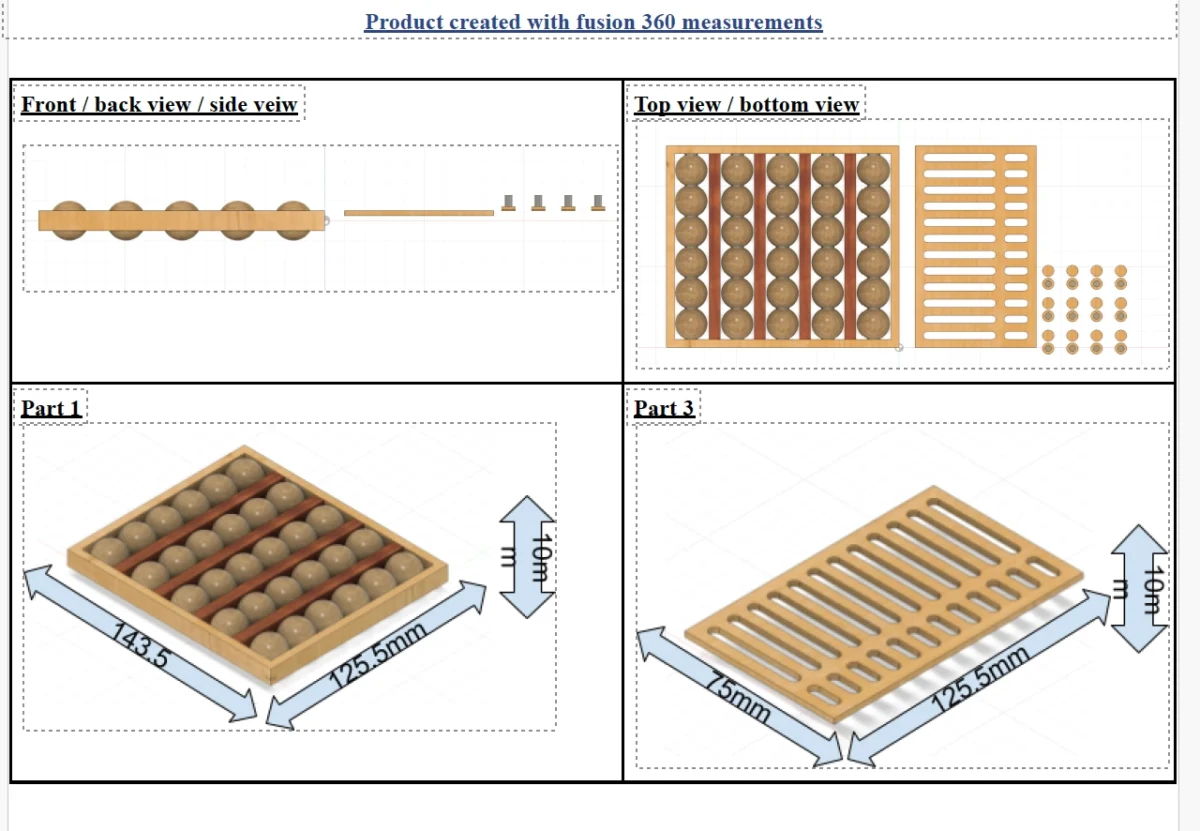
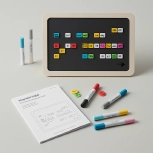
The final product is a portable wooden habit tracker featuring a dual tracking system that allows users to monitor both daily and long-term habits. It incorporates a dry-erase writing surface for customizable habits, mechanical tracking switches for daily progress, and a monthly bead-tracking mechanism that visually reinforces consistency over time. Designed to be reusable, lightweight, and distraction-free, the product provides an engaging alternative to digital habit-tracking applications.

Engineering Design Process

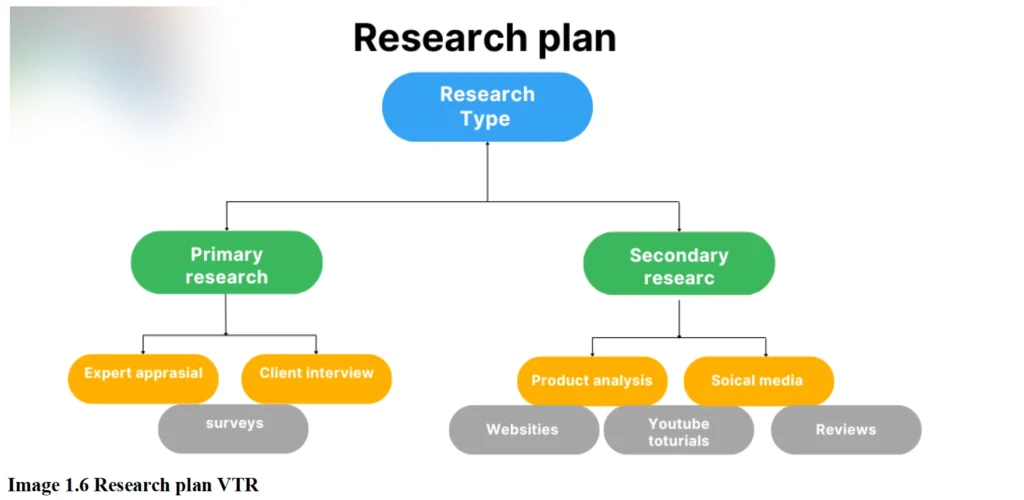
The project followed a structured engineering design process, progressing through Problem Identification | User Research | Product Analysis | Concept Development | CAD Modelling | Prototype Development | Manufacturing | Product Testing | User Evaluation | Design Improvements. Each stage contributed to refining the final solution by incorporating user feedback, evaluating design alternatives, and improving functionality, usability, manufacturability, and overall product performance.

Materials & Technologies Used

Materials Pine Wood | MDF Wood | Wooden Beads | Dry-Erase Surface | 3D Printed Components | Wood Polish & Adhesives

Software & Tools Fusion 360 | Laser Cutter | 3D Printer |Table Saw | Hand Drill | Sanding & Finishing Tools

Engineering Concepts

This project applied several engineering and product design principles, including Human-Centered Design, Product Design, Ergonomics, CAD Modelling, Rapid Prototyping, Material Selection, Design for Manufacturing (DFM), Sustainability, User Testing, and Iterative Design to create an effective and practical solution for everyday use.


Key Features

  • Dual habit-tracking system for daily and monthly progress
  • Interactive mechanical switches for tactile feedback
  • Dry-erase surface for customizable habit tracking
  • Visual progress tracking using color-coded beads
  • Lightweight, portable, and reusable design
  • Non-digital solution to reduce screen distractions

Skills Developed

Throughout this project, I strengthened my skills in Engineering Design, CAD Modelling (Fusion 360), Product Development, Research & User Analysis, Rapid Prototyping, 3D Printing, Laser Cutting, Manufacturing Techniques, Testing & Evaluation, and Problem Solving while gaining practical experience in transforming user needs into a functional engineering solution.


Key Learning

This project strengthened my understanding of the complete engineering product development cycle, from identifying a real-world problem to researching user needs, developing prototypes, manufacturing the final product, and evaluating its performance. It enhanced my ability to combine engineering principles with user-centered design while reinforcing the importance of iterative testing, material selection, and continuous improvement in developing practical solutions.

Categories
My Projects

F1 in Schools Engineering Design Exploration

Aerodynamics · CAD Design · Team Engineering

Overview:

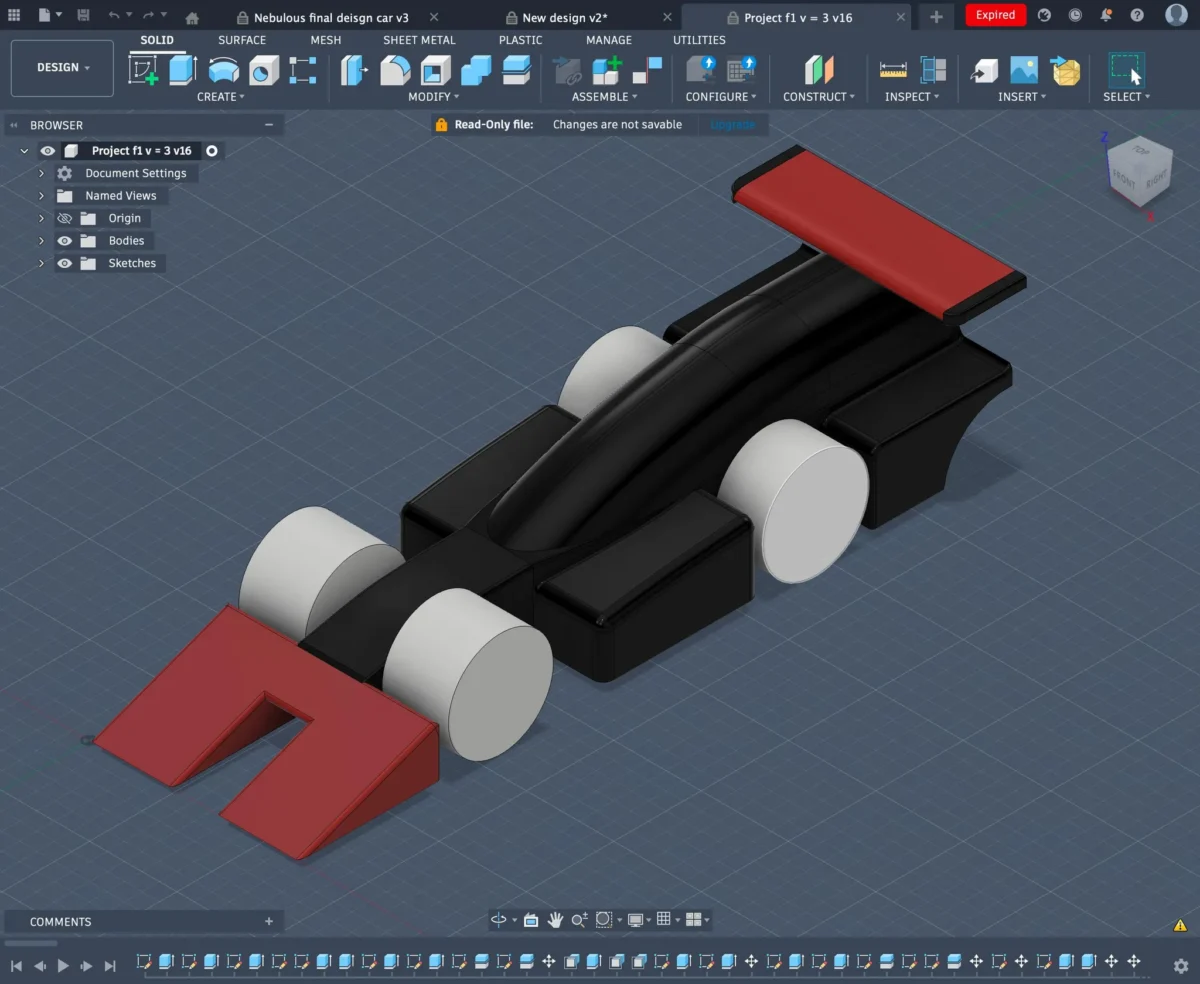
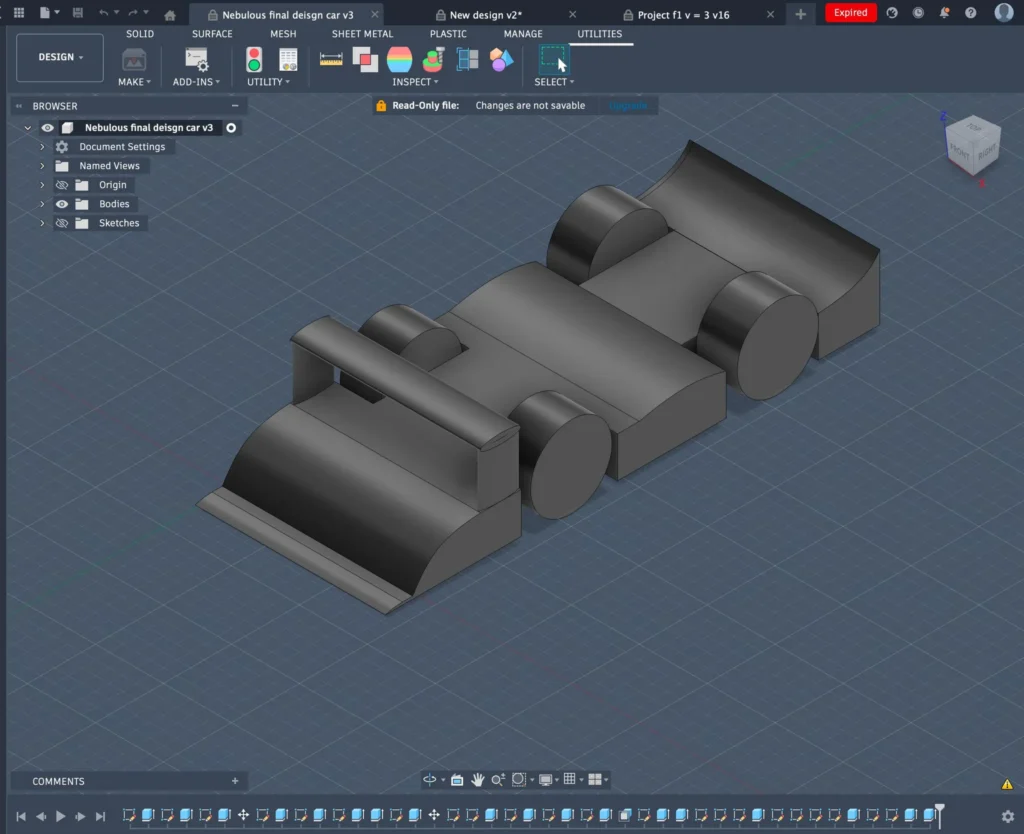
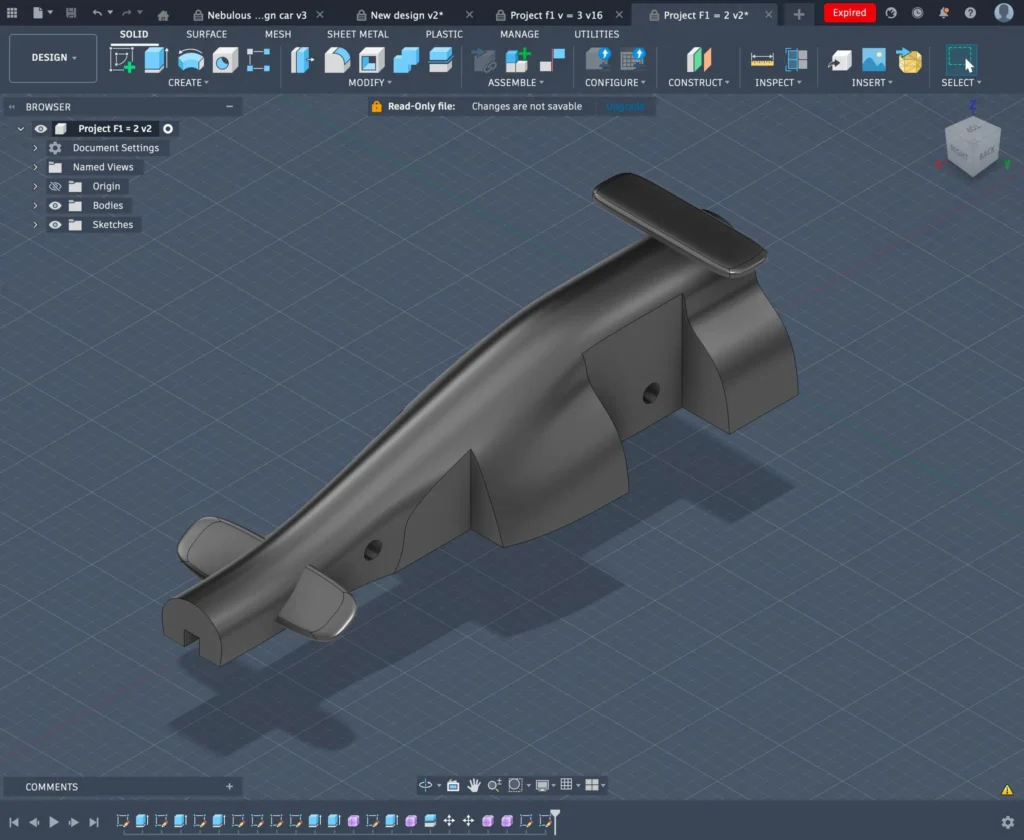
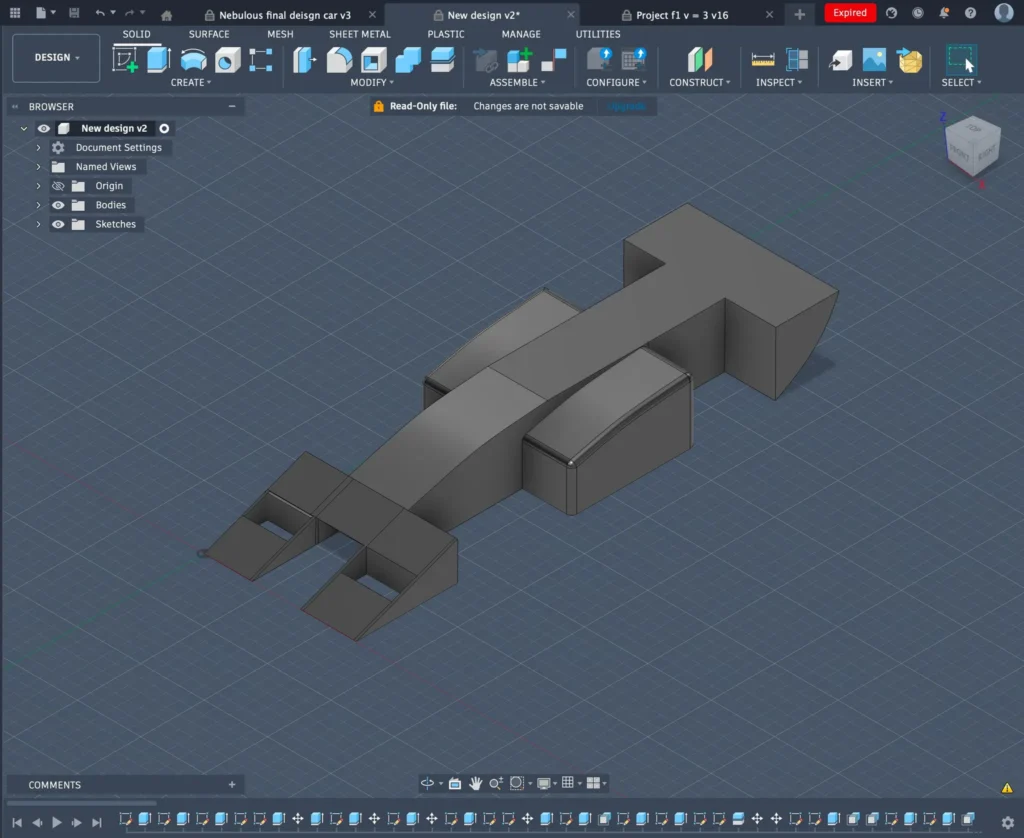
During MYP Year 4, I participated in the F1 in Schools STEM programme organised by STEM Club India a global challenge that introduces students to engineering design through the creation of a miniature Formula 1 car. As a member of Team CO₂, I took on the role of Design & Manufacturing Team Member, using Autodesk Fusion 360 to develop and refine the car’s 3D model across multiple design iterations.

What I Did:

The design process began with an initial CAD concept focused on stability and competition specifications, before progressing through aerodynamic refinement smoothing curves, improving airflow, and optimising the front wing for reduced drag. Each iteration taught me how small design adjustments directly impact performance. Working within a team where members handled design, manufacturing, sponsorship, and presentation also gave me my first real experience of how engineering projects depend on coordination and shared problem-solving.

Key Skills:

Autodesk Fusion 360 · CAD Modelling · Aerodynamics · Design Iteration · Team Collaboration

Key Learning:

This was my first hands-on experience with professional design software and the full engineering design process from concept to refined prototype. It sparked my deeper interest in mechanical design and aerodynamics.