

PRATY

Pratyaksh

Categories
My Research Work

Habit Management and Student Well-Being

Date: January – February 2025

Grade 9th

What Inspired Me to Explore This Topic?

As a high school student, I often observe how academic pressure, deadlines, and extracurricular commitments make it difficult for students to maintain healthy daily habits. Many students struggle with procrastination, irregular sleep schedules, poor time management, and a lack of balance between academics and personal well-being. This motivated me to investigate the relationship between habit management, productivity, and overall well-being among teenagers.

Project Overview

This research explores how poor time management and procrastination can disrupt essential habits such as sleeping, eating, exercising, and maintaining a healthy routine. Through surveys, interviews, literature review, and product analysis, I examined the challenges faced by high school students and evaluated potential solutions that could encourage positive behavioral change.

Based on the findings, I designed a physical habit-tracking system aimed at helping students build consistency, improve self-discipline, and develop healthier daily routines through visual progress tracking and habit reinforcement.

Key Outcomes

  • Identified procrastination and poor time management as major barriers to habit formation among students.
  • Explored the impact of disrupted habits on mental well-being, stress levels, and academic performance.
  • Developed a habit-tracking solution that combines daily and long-term progress monitoring.
  • Applied principles of user-centered design to create an engaging, practical, and accessible tool for students.

Real-World Relevance

The challenges explored in this project are experienced by students worldwide. Research consistently shows that effective habit formation and time management contribute to improved academic performance, reduced stress, and better overall well-being. The concepts investigated in this project can be applied in schools, homes, and personal development programs to help students establish sustainable habits and achieve long-term goals.
Best Way To Design

Lorem Ipsum is simply dummy text of the printing and typesetting industry. Lorem Ipsum has been the industry’s standard dummy text ever since the 1500s, when an unknown printer took a galley of type and scrambled it to make a type specimen book. It has survived not only five centuries, but also the leap into electronic typesetting, remaining essentially unchanged. It was popularised in the 1960s with the release of Letraset sheets containing Lorem Ipsum passages, and more recently with desktop publishing software like Aldus PageMaker including versions of Lorem Ipsum.

First, solve the problem. Then write the code.

It is a long established fact that a reader will be distracted by the readable content of a page when looking at its layout. The point of using Lorem Ipsum is that it has a more-or-less normal distribution of letters, as opposed to using ‘Content here, content here’, making it look like readable English. Many desktop publishing packages and web page editors now use Lorem Ipsum as their default model text, and a search for ‘lorem ipsum’ will uncover many web sites still in their infancy. Various versions have evolved over the years, sometimes by accident, sometimes on purpose (injected humour and the like).

In some ways, programming is like painting. You start with a blank canvas and certain basic raw materials. You use a combination of science, art, and craft to determine what to do with them.

The standard chunk of Lorem Ipsum used since the 1500s is reproduced below for those interested. Sections 1.10.32 and 1.10.33 from “de Finibus Bonorum et Malorum” by Cicero are also reproduced in their exact original form, accompanied by English versions from the 1914 translation by H. Rackham.

Contrary to popular belief, Lorem Ipsum is not simply random text. It has roots in a piece of classical Latin literature from 45 BC, making it over 2000 years old. Richard McClintock, a Latin professor at Hampden-Sydney College in Virginia, looked up one of the more obscure Latin words, consectetur, from a Lorem Ipsum passage, and going through the cites of the word in classical literature, discovered the undoubtable source. Lorem Ipsum comes from sections 1.10.32 and 1.10.33 of “de Finibus Bonorum et Malorum” (The Extremes of Good and Evil) by Cicero, written in 45 BC. This book is a treatise on the theory of ethics, very popular during the Renaissance. The first line of Lorem Ipsum, “Lorem ipsum dolor sit amet..”, comes from a line in section 1.10.32.

Categories
My Internship

Solids works 3D Printing & Additive Manufacturing Internship

Jet Aerospace Aviation Research Center | IHFC, IIT Delhi

View Certificate

View Letter of Recommendation

CAD Design | Additive Manufacturing | Rapid Prototyping | Aerospace Engineering

Internship Overview

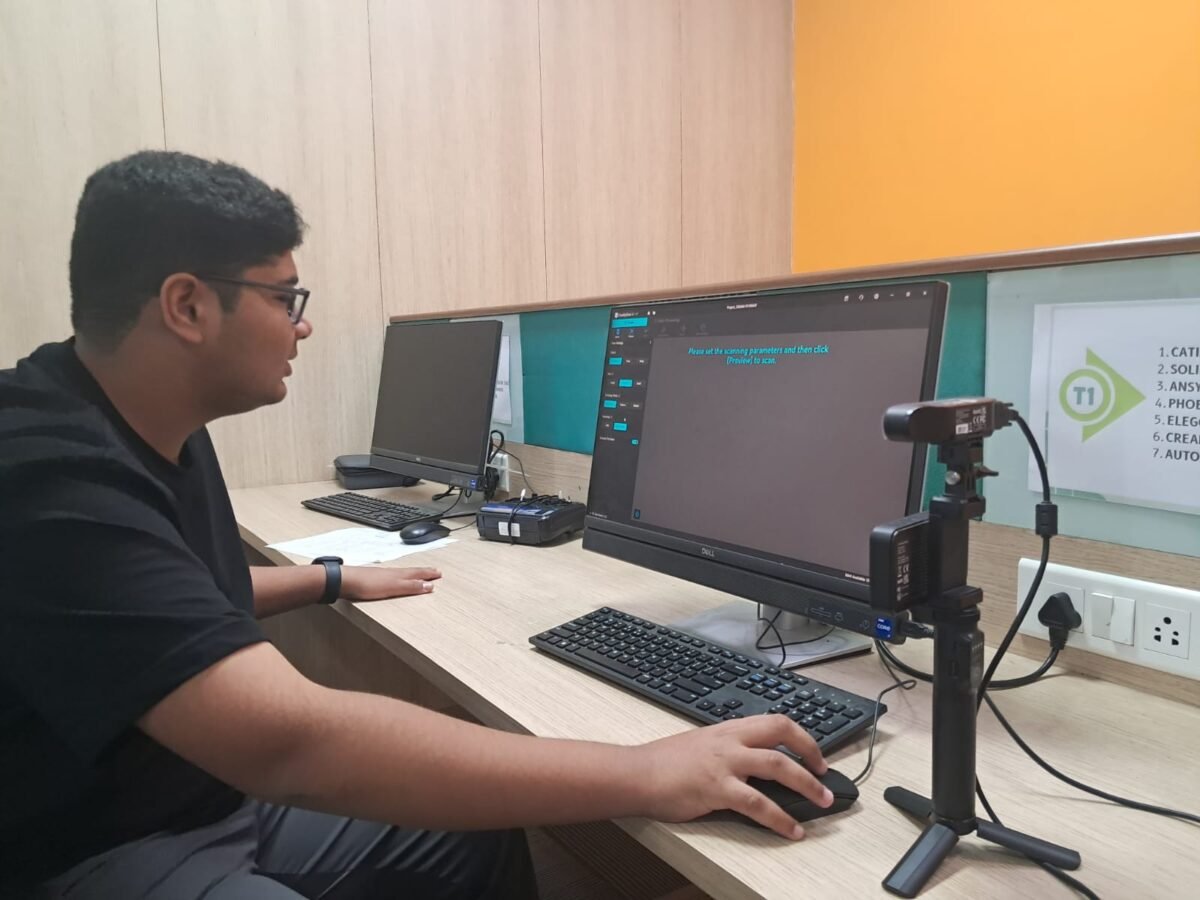
This internship provided hands-on experience in the complete engineering product development cycle, from digital design to physical prototype fabrication. Conducted by Jet Aerospace Aviation Research Center in collaboration with IHFC, IIT Delhi, the programme introduced me to the practical applications of CAD modelling, additive manufacturing, and aerospace design.

My interest in engineering design began with learning SolidWorks through Coursera, where I developed foundational CAD modelling skills. Wanting to understand how digital designs are transformed into real-world products, I joined this internship to gain practical experience in prototype development and advanced manufacturing technologies.

The objective of the internship was to develop practical skills in 3D CAD modelling, additive manufacturing, and rapid prototyping while understanding how engineering designs move from concept to physical production.

Engineering Experience

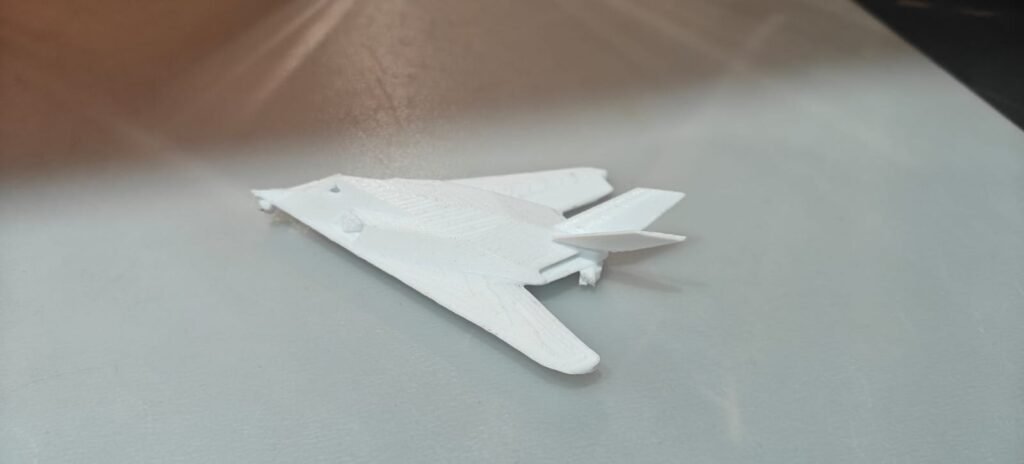
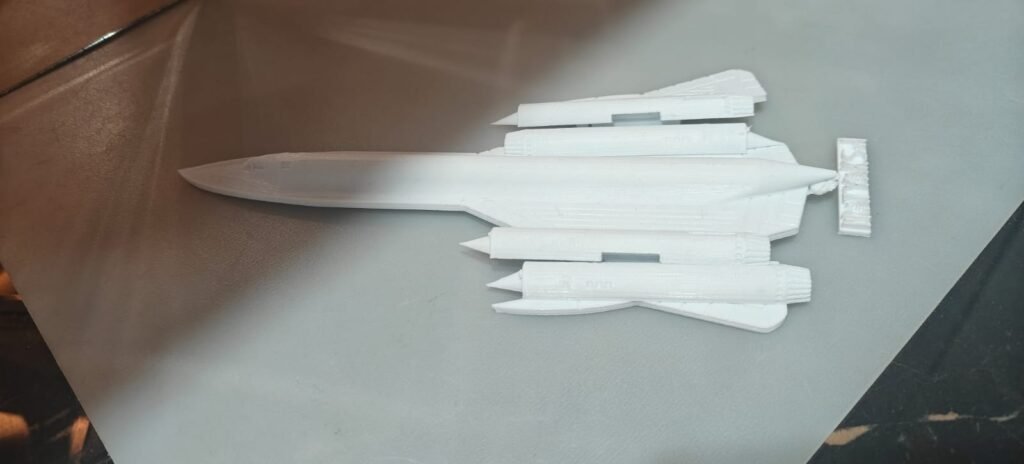
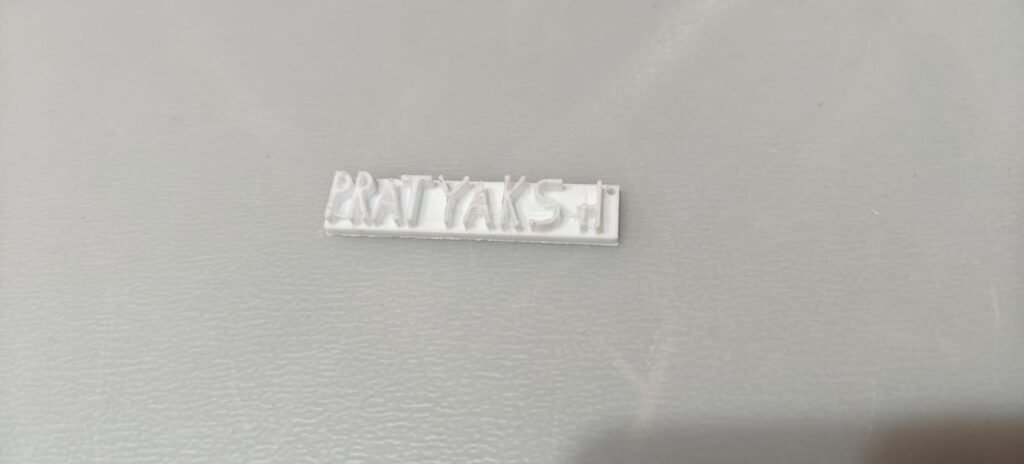
During the five-day programme, I designed a jet aircraft model using CAD software and prepared it for additive manufacturing. The digital model was then converted into a physical prototype using 3D printing technology, providing first-hand experience of the complete design-to-manufacturing workflow.

The internship also introduced me to engineering considerations such as design optimization, manufacturability, material selection, print preparation, and prototype evaluation, reinforcing the importance of precision and iterative design in engineering.

Software SolidWorks | CAD Modelling Software

Technologies 3D Printing | Additive Manufacturing | Rapid Prototyping | Aerospace Design

Engineering Concepts: This internship strengthened my understanding of Computer-Aided Design (CAD), Additive Manufacturing, Product Development, Rapid Prototyping, Design for Manufacturing (DFM), Material Selection, Aerospace Engineering Principles, and Digital-to-Physical Manufacturing.

Technical Skills Developed: Throughout the internship, I developed practical skills in 3D CAD Modelling, Engineering Design, Prototype Development, 3D Printing, Product Visualization, Design Optimization, Manufacturing Processes, and Technical Problem Solving.

Outcome

Successfully designed and manufactured a 3D-printed jet aircraft prototype, gaining hands-on experience in modern engineering workflows from digital modelling to physical fabrication. The internship concluded with the award of a Certificate of Completion and a Letter of Recommendation recognising my technical aptitude, creativity, and commitment to engineering.

Key Learning

This internship demonstrated how engineering extends beyond digital design by integrating modelling, manufacturing, testing, and continuous refinement into a single development process. It strengthened my understanding of how additive manufacturing is transforming modern product development and reinforced my interest in mechanical engineering, mechatronics, and advanced manufacturing technologies.